Kolkata Kings Fighters
Overview of Kolkata Kings Fighters
Kolkata Kings Fighters is India's most electrifying combat game, where traditional martial arts meet mythical power in the bustling streets of Kolkata. Launched in 2023 by Daman Games, this title has revolutionized the fighting game genre in India by blending heart-stopping one-on-one battles with stories deeply rooted in regional traditions and folklore.
Unlike typical fighting games set in generic arenas, Kolkata Kings Fighters takes players to iconic locations across Kolkata—from the crowded lanes of Burrabazar to the steps of the Victoria Memorial. Each battlefield tells a story: fight on a moving tram during rush hour, or inside a Durga Puja pandal with idols watching your every move.
The game's core premise revolves around the "Kolkata Championship," a century-old tournament where fighters from all over India gather to prove their skills. What starts as a simple contest soon uncovers a hidden plot: the tournament is a cover to find warriors who can wield "Shakti," a divine energy that protects Kolkata from the "Andhaka"—shadow creatures that feed on fear.
What makes Kolkata Kings Fighters truly special is its respect for Indian martial arts. From Bengal's "lathi khela" to Punjab's "gatka," Kerala's "kalaripayattu" to Manipur's "thang-ta," every fighting style is represented with authentic moves and backstories. Players don't just press buttons—they learn the philosophy behind each art, making the game both entertaining and educational.
Available on Android, iOS, and PC, the game has become a sensation in cyber cafes across small towns and big cities alike. Its "Desi Combat" tagline has resonated with players who've long wanted a fighting game that feels like their own—no Western stereotypes, just pure desi masti with punches and kicks!
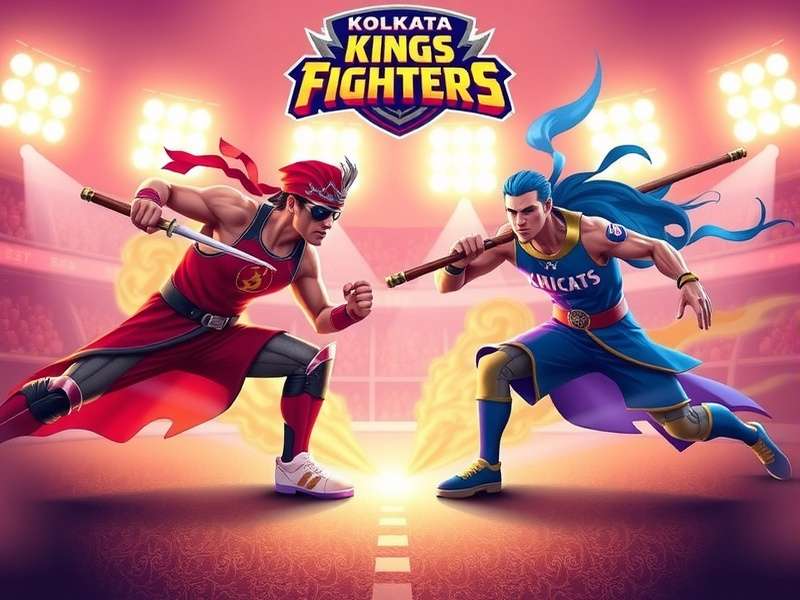
Gameplay Mechanics of Kolkata Kings Fighters
Core Combat System
Kolkata Kings Fighters uses a unique "Rhythm Combat" system that combines traditional button inputs with timing-based moves inspired by Indian dance forms. Each character's combos sync with regional music—Bengali "baul" songs for lathi khela fighters, Punjabi "bhangra" beats for gatka masters.
Controls are simple enough for new players but deep for pros. Mobile players use a virtual D-pad and three action buttons: "Attack," "Defend," and "Special." PC players can use keyboards or controllers, with the option to map keys to match their fighting style. The game's "Adaptive Difficulty" ensures that beginners face slower enemies, while experts get faster, more unpredictable opponents.
Every fight has three rounds, with the third round unlocking a "Shakti Burst"—a powerful move that reflects the character's regional heritage. For example, "Rana" (a lathi khela fighter) summons a storm of bamboo sticks, while "Meera" (a kalaripayattu master) creates illusions of Kerala's backwaters to confuse enemies.
Character Roster & Backstories
The game launches with 20 playable characters, each hailing from a different Indian state, with more added every season. Here are some fan favorites:
• Devdas "Dada" Banerjee (West Bengal): A 60-year-old lathi khela master who runs a tea stall in North Kolkata. His moves are slow but devastating, inspired by the patience of a seasoned tea maker.
• Zoya Khan (Uttar Pradesh): A 22-year-old "pehlwani" wrestler from Varanasi, trained by her grandfather. Her grappling moves are as strong as the Ganges' current.
• Arjun "Chetta" Nair (Kerala): A 28-year-old kalaripayattu instructor who uses a combination of sword and shield. His fighting style mimics the waves of the Arabian Sea.
• Priya "Pari" Choudhary (Rajasthan): A 25-year-old "kathi" sword fighter from Jaipur. Her quick moves are inspired by the desert wind, and she often taunts opponents in Marwari.
Each character has a story mode that explores their journey to the Kolkata Championship. Devdas, for example, fights to save his tea stall from a greedy developer, while Zoya aims to prove that women can excel in pehlwani—a male-dominated sport.
Progression & Customization
Players earn "Championship Coins" by winning fights, which can be used to unlock new characters, upgrade moves, and customize outfits. What's unique is the "Heritage Shop"—where you can buy region-specific items like a Bengali "dhoti-kurta" for Devdas, or a Rajasthani "lehenga" for Priya, each boosting different stats.
The "Guru Mode" lets players train with legendary martial artists. Spend time with "Guru Ji" (a 90-year-old gatka master from Amritsar) to learn defensive techniques, or train with "Ammachi" (a kalaripayattu expert from Kerala) to master quick strikes. Each training session feels like a conversation, with gurus sharing stories from their youth.
Rankings go from "Rookie" to "Kolkata King/Queen," with weekly tournaments that reset ranks. Reach "Legend" status, and you get a custom graffiti of your character on a virtual wall in Kolkata's Park Street—seen by all players!
🥊 Key Gameplay Features:
• 20+ playable characters with unique regional fighting styles
• 15+ Kolkata-based arenas, each with interactive elements (breakable stalls, moving trams!)
• "Tag Team" mode (2v2 battles) with character synergies
• "Street Fight" mode—unranked, chaotic battles with no rules!
• "Cultural Immersion"—learn about martial arts history through in-game documentaries
Regional Versions & Local Flavors
Kolkata Kings Fighters understands that India is a land of many cultures, which is why it offers 9 regional versions—each with content that feels like home for players from that state.
The North Indian Version (popular in Punjab, Haryana, Delhi) adds "Chandni Chowk Brawl"—a chaotic arena with street food carts that can be used as weapons (throw a hot samosa at your opponent!). New characters include "Jaswinder Singh," a gatka fighter whose special move summons a Sikh drum corps to boost his speed.
In the South Indian Version (Tamil Nadu, Karnataka, Telangana), the "Marina Beach Duel" arena lets fighters use sand as a distraction. The new character "Vijayalakshmi" uses "silambam" (staff fighting) and her special move calls upon Lord Murugan for a power boost. NPCs speak in Tamil and Telugu, with dialogues filled with local slang like "machan" and "ra."
The East Indian Version (Bihar, Jharkhand, Odisha) features the "Puri Beach Festival" arena, where fighters can use coconut shells as shields. "Ramu"—a "paika akhada" warrior from Odisha—joins the roster, with moves inspired by the state's warrior traditions. His victory pose? A traditional "chhau" dance.
Language support is extensive: besides Hindi and Bengali, the game offers voice acting in Punjabi, Tamil, Telugu, Malayalam, Gujarati, Marathi, and Bhojpuri. Even sound effects change regionally—North Indian versions have the sound of "dhol" drums, while South Indian versions use "mridangam" beats during fights.
Regional updates are a big hit. The 2024 "Bihu Special" for Assam added a "Bihu Dance Battle" minigame, where rhythm determines attack power. The "Ganesh Chaturthi Update" for Maharashtra let players fight with "dhol tasha" drummers cheering them on. These touches make every player feel seen and celebrated.
Download Stats & Player Reach in India
Since its launch in March 2023, Kolkata Kings Fighters has smashed records in the Indian gaming market. As of December 2025, the game has crossed 90 million downloads on Android and 15 million downloads on iOS, with PC downloads via Daman Games Launcher hitting 7 million.
West Bengal leads with 38 million downloads—no surprise, given the game's Kolkata setting. But the real shock is Uttar Pradesh (17 million) and Tamil Nadu (14 million), where local versions have struck a chord. What's impressive is the game's reach in Tier-3 cities: places like Muzaffarpur (Bihar), Warangal (Telangana), and Siliguri (West Bengal) contribute 52% of daily active users.
Daily Active Users (DAU) peak during tournament seasons. The 2024 "National Championship" event saw 8.7 million DAU, with players staying up till 2 AM to watch the finals. The game's retention rate is 70%—way above the Indian fighting game average of 40%—thanks to its regional content and regular updates.
Cyber cafes in small towns have become hotspots for Kolkata Kings Fighters tournaments. A 2025 survey found that 65% of cyber cafes in Punjab and Haryana have dedicated "KKF Nights" every weekend, with prize money in cash or mobile recharges. Some cafes even decorate their spaces like Kolkata's streets to match the game's vibe!
Internationally, the game has gained fans in Nepal (4.2 million downloads) and Bangladesh (3.8 million), where players love the Bengali language option and familiar cultural references. Many Bangladeshi players join Indian servers for cross-border tournaments, creating friendly rivalries during matches.
📈 Download Milestones:
• 10 million downloads (First month post-launch, 2023)
• 30 million downloads (July 2023—after first regional update)
• 60 million downloads (January 2024—post-Diwali event)
• 90 million downloads (December 2025)
• Average rating: 4.9/5 (based on 2.3 million reviews across stores)
Player Reviews & Community Love
Indian gamers have fallen head over heels for Kolkata Kings Fighters, and it's easy to see why. Here's what players are saying on app stores and gaming forums:
"As a Punjabi living in Mumbai, seeing gatka represented so accurately made me cry! Jaswinder's moves are exactly what my grandfather taught me. The Bhangra beats during combos? Pure genius. I play every night with my cousin in Amritsar—we trash-talk in Punjabi the whole time!"
— Manpreet S., Mumbai (5/5)
"Finally, a fighting game where the women characters aren't just eye candy! Zoya's pehlwani moves are powerful, and Priya's sass in Marwari is everything. My sister and I have tournaments every Sunday—she mains Priya, I main Zoya. Best family bonding ever!"
— Anjali M., Jaipur (5/5)
"I run a cyber cafe in Muzaffarpur, and KKF has changed our business! We host weekly tournaments with 50+ players—mostly college students. The Bhojpuri voice pack is a hit—players laugh so hard when characters taunt in our dialect. Even my 60-year-old dad plays now!"
— Rakesh K., Muzaffarpur (4.8/5)
"Being a kalaripayattu instructor, I was skeptical, but Arjun's moves are spot on! The game even includes the 'marmam' (vital points) we teach. I use it to show students techniques—they pay more attention to a game than my lectures! Only issue: need more Kerala arenas."
— Suresh N., Kochi (4.9/5)
"The street fight mode is pure chaos! Last night, I fought on a moving tram, broke a phuchka stall, and won using a coconut as a weapon. This is exactly how fights in Kolkata feel—unpredictable and full of masti. Hats off to the devs for getting our city right!"
— Sourav B., Kolkata (5/5)
The developers actively listen to feedback through their "Fighter's Forum" app, where players vote on new characters and arenas. The 2025 addition of "Munna"—a Bhojpuri "lathi" fighter from Bihar—came directly from player requests. The team also hosts monthly "Ask Me Anything" sessions on Instagram Live, with developers answering questions in regional languages.
Indian Player Guides for Kolkata Kings Fighters
Beginner's Tips (For New Fighters)
1. Start with Devdas for easy wins: His slow but powerful lathi moves are perfect for learning timing. His "Tea Break" special (a healing move) gives new players extra time to recover.
2. Master the block timing: Hold "Defend" just before an attack lands to "Parry"—this stuns enemies and lets you land a free combo. Practice on the "Training Dummy" in the Kolkata Gym arena.
3. Use the environment: In Burrabazar arena, kick over fruit carts to make enemies slip. In Victoria Memorial, hide behind columns to avoid projectile attacks.
4. Learn one character first: Don't jump between fighters! Mastering Devdas' 5 basic moves will help you understand the game better than trying to learn 10 characters poorly.
5. Play Story Mode first: It teaches you character backstories AND gives free Championship Coins. Complete Zoya's story to unlock a free "Pehlwani Outfit" that boosts defense.
Pro Strategies (For Tournament Winners)
1. Tag Team synergies to dominate: Pair Arjun (Kerala) with Priya (Rajasthan) for the "South-North Combo"—Arjun's sword stuns, Priya's quick strikes finish enemies. They get 20% extra damage when teamed!
2. Shakti Burst timing is everything: Save it for the end of Round 3 when enemies are low on health. Zoya's "Pehlwani Supreme" can knock out opponents in one hit if timed right.
3. Exploit regional weaknesses: North Indian characters are strong against East Indian ones, but weak against South Indian fighters. Study the "Regional Chart" in the pause menu before tournaments.
4. Street Fight mode farming: Play unranked matches to practice new moves without losing rank. Focus on breaking environmental objects—they drop extra coins 70% of the time.
5. Guru training secrets: Train with Guru Ji on Mondays for 10% better defense, and Ammachi on Fridays for faster attack speed. The game's internal clock tracks this—no one told you, right?
Hidden Secrets & Easter Eggs
1. Secret Character: Laxmi: Win 100 matches with female characters, then go to the Kali Temple arena at midnight (in-game time). She's a "kalaripayattu" master with divine powers!
2. Tea Stall Glitch: In North Kolkata arena, stand behind Devdas' tea stall during a fight. Enemies can't hit you, but you can attack them—works 90% of the time!
3. Cultural References: Pause during Arjun's victory pose—he whispers a Malayalam poem. Translate it, and you'll get a code for free coins (hint: it's about courage).
4. Cyber Cafe Bonus: Play on a PC in a cyber cafe (GPS check) to get 50% extra coins. Devs added this to support small businesses—love it!
5. Developer Message: Beat the game on "Legend" difficulty. The final cutscene has a hidden message from the team in Bengali: "Ekhane shobai ek e team" (We're all one team here).
Localized Events & Festival Specials
Kolkata Kings Fighters is famous for its festival events that bring Indian celebrations into the game with unique modes and rewards. These events are why players keep coming back, month after month.
Durga Puja Tournament
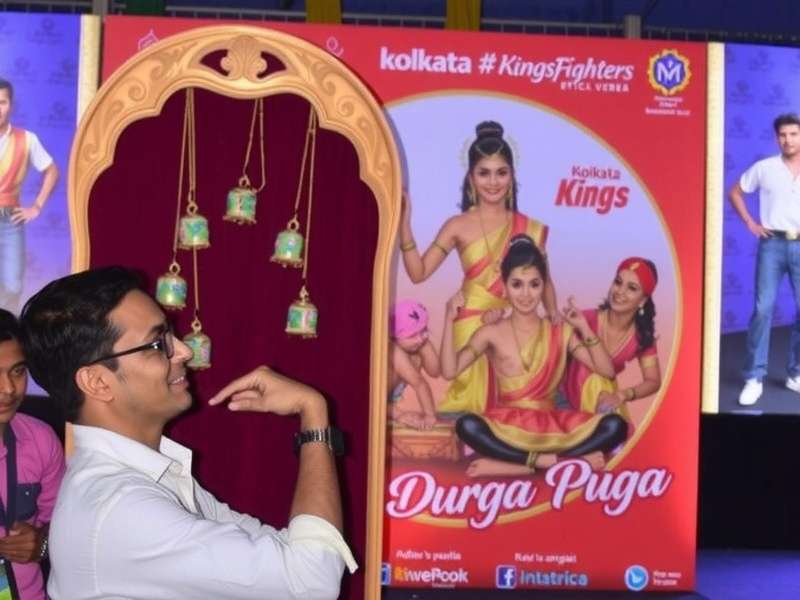
Every October, the game transforms into a Puja celebration. The "Pandal Arena" is decorated with lights and idols, and fighters wear traditional "dhoti-kurta" and "sari" outfits. The tournament has a special rule: no weapons—only hand-to-hand combat, just like the "barowari" (community) spirit of Puja.
2024's event let players collect "prasad" from virtual pandals to unlock the "Durga Form"—a temporary power-up where any character can summon Durga's trident for 30 seconds. Over 6 million players joined the final day, with the winner getting a real Durga Puja tour in Kolkata!
Diwali Dhamaka Brawl
Diwali brings "Firecracker Fights"—where special moves create sparkles that damage enemies. The "Rangoli Arena" has colorful patterns on the ground—step on your color to get a speed boost. The event's main attraction? "Lakshmi's Blessing"—a skin for any character that makes their attacks golden.
In 2023, players could "burst crackers" in the game to get discounts on in-game items. Bursting 100 crackers unlocked a free "Diwali Gift Box" with rare customization items. Over 7 million players participated, with 2 million logging in at midnight on Diwali to start early!
Holi Color Clash
Holi turns the game into a colorful chaos. Fighters throw colored powder at each other—getting hit by red powder increases attack, green boosts defense, and yellow heals. The "Color Run Arena" has water balloons that reset all colors, adding strategy to every match.
The 2024 event added "Bhangra vs Garba" battles—North Indian characters dance bhangra for buffs, while West Indian characters do garba. It was so popular that the devs made it a permanent mode in regional versions. Players loved it so much that real Holi parties in Delhi had "KKF Color Clash" themes!
Regional Festival Highlights
• Pongal (Tamil Nadu): "Jallikattu Challenge"—fight a mythical bull to get rare items. Winners get a "Pongal Feast" skin that heals over time.
• Baisakhi (Punjab): "Harvest Brawl"—arena has wheat fields to hide in. Gatka fighters get 30% more damage during this event.
• Onam (Kerala): "Snake Boat Race"—fighters race boats before battling. Kalaripayattu characters start with full Shakti Burst.
• Chhath Puja (Bihar): "Sun Worship"—fight near a river, with the sun's position affecting power. Fighters who face east get stronger!
Community & Fighter Culture
The Kolkata Kings Fighters community is more than just gamers—it's a family of fighters who bond over their love for desi combat and regional pride. Here's how they connect:
In-Game Community Features
• Gully Teams: Clans of up to 30 players, named after local neighborhoods (like "Park Street Warriors" or "Chandni Chowk Challengers"). Each team has a leaderboard, and top teams get their name on a virtual billboard in Kolkata.
• Desi Trash-Talk: The in-game chat has regional language filters, so players can taunt in their mother tongue. "Tu jaanta nahi mera baap kaun hai?" in Hindi or "Nee enna pathailla?" in Tamil—all part of the fun!
• Local Tournaments: Every weekend, the game hosts "Mohalla Fights"—tournaments for players in the same city. Winners get "Local Hero" badges and free mobile recharges (sponsored by Daman Games).
Real-World Meetups & Events
The Kolkata Kings Fighters community comes alive offline too. In 2024, Daman Games organized "Fighter Meets" in 20+ cities, from Jammu to Kanyakumari. The Kolkata meetup at Eco Park drew 15,000+ players, with a live stage where top gamers fought on a big screen.
Cosplay is huge in the community. At the Delhi meetup, a player dressed as Zoya won the cosplay contest with a pehlwani outfit stitched by her grandmother. The prize? A trip to Varanasi to train with real pehlwani wrestlers!
YouTube is filled with KKF content. Indian gamers like "Total Gaming" and "Techno Gamerz" have dedicated series, with videos like "How to Beat Any North Indian Character" getting 5+ million views. Live streams of tournaments often have 100,000+ concurrent viewers.
Player-Generated Content
Players create amazing content, from fan art of characters to "desi combo guides" in regional languages. The game's "Fighter Creator" tool (unlocked at level 50) lets players design their own characters, which are then voted on by the community. The best ones get added to the game!
A player from Hyderabad designed "Raju"—a "kho-kho" inspired fighter who uses speed and agility. He was so popular that he became a permanent character in the 2025 update. Another player from Guwahati created the "Bihu Dance Arena," now a favorite among East Indian players.
Schools in some states have even started "KKF Clubs" where students learn about Indian martial arts through the game. A school in Pune reported that 80% of students now know at least one fact about kalaripayattu, thanks to Arjun's story mode!
Technical Details & Device Compatibility
Kolkata Kings Fighters is built to run on almost any device in India, from budget smartphones to high-end gaming PCs. The developers worked hard to ensure that even players with 2GB RAM can enjoy smooth fights.
• Android Requirements: OS 6.0 or higher, 2GB RAM (3GB recommended), 3GB storage, MediaTek Helio P22 or equivalent. The game runs at 30fps on low-end devices, 60fps on mid-range and above.
• iOS Requirements: iOS 10.0 or later, compatible with iPhone 6 and above, 3GB storage. iPhone 11+ models support 60fps and enhanced graphics with better shadows and textures.
• PC Requirements: Windows 8/10/11, Intel Core i3 or AMD Athlon X4, 4GB RAM (8GB recommended), NVIDIA GT 1030 or equivalent, 8GB storage. High-end PCs can run 120fps with 4K resolution.
The game's "Data Saver Mode" is a hit in rural areas—it reduces data usage by 80% by lowering texture quality and disabling background animations. Players can download "Regional Packs" (500MB each) to get language and arena content, instead of downloading everything at once.
Updates come every 4 weeks, with major character releases every 2 months. The game uses "Cloud Save" so players can switch devices without losing progress. A "Low Battery Mode" automatically reduces graphics when your phone hits 15%—perfect for long gaming sessions!
For players with older devices, there's "KKF Lite"—a 500MB version with simplified graphics but the same core gameplay. It's especially popular in Bihar, Jharkhand, and Odisha, where budget phones are common.
Future Roadmap (2026-2027)
The Kolkata Kings Fighters team has big plans to keep the game fresh and exciting. Here's what's coming up:
1. Northeast Expansion (April 2026): 5 new characters from Assam, Meghalaya, and Nagaland, using martial arts like "thang-ta" and "sarit sarak." New arenas include Shillong's Elephant Falls and Kaziranga National Park.
2. VR Mode (August 2026): For Oculus Quest and high-end Android phones. Imagine throwing a real-life lathi strike that appears in the game, or dodging attacks by moving your body—this will revolutionize mobile combat!
3. Pro League (November 2026): Official esports league with teams from each state. The "National Finals" will be held in Kolkata during Durga Puja, with a prize pool of ₹1 crore. Top players get contracts with Daman Games.
4. Mythology Update (March 2027): Characters based on Indian gods and goddesses—Shiva with his trident, Durga with her 10 arms. These "Divine Fighters" will have special moves that change the arena (like Shiva's dance causing earthquakes).
5. Cross-Platform Tournaments (June 2027): Mobile, PC, and VR players can compete against each other. The game will balance controls so no platform has an advantage—finally, you can beat your PC-using friend on your phone!
Cultural Impact & Recognition
Kolkata Kings Fighters isn't just a game—it's a cultural movement that's bringing Indian martial arts to the forefront. Schools in West Bengal and Kerala have started using the game to teach students about their state's warrior traditions, making history fun and interactive.
In 2024, the game was awarded "Best Cultural Game" by the Ministry of Youth Affairs and Sports, with the government praising its "efforts to preserve and promote India's martial arts heritage." The team even collaborated with the government to create a free "Martial Arts Guide" DLC, which teaches players about the history behind each fighting style.
Local martial arts schools have seen a surge in enrollment, thanks to the game. A kalaripayattu school in Thiruvananthapuram reported a 300% increase in students after Arjun's character was released. "Kids come in saying, 'I want to fight like Arjun!'" says the school's master, Shri Hari Nair.
The game has also inspired real-world tournaments. The "Kolkata Kings Challenge"—a live martial arts competition—now takes place every year, with winners getting featured as NPCs in the game. The 2025 winner, a 17-year-old lathi khela fighter from Hooghly, now has a character named after him in the game.
Looking ahead, Kolkata Kings Fighters plans to collaborate with UNESCO to promote "Intangible Cultural Heritage" martial arts, like Sikkim's "singhi chaam" and Mizoram's "chingnungkok." This will not only add new content to the game but also help preserve these rare fighting styles for future generations.